Keycap profiles guide: Cherry, OEM, SA, XDA, DSA and MT3
Keycap profile is the shape and height of each key. It changes how your keyboard looks, feels and even sounds. Here is a simple tour of the six common profiles, plus PBT vs ABS.
By Ted · Founder Kanso Type 3 min read
Swapping keycaps is the fastest way to change how a keyboard looks and feels. Two words come up all the time when you shop for keycaps: profile (the shape) and material (the plastic).
Sculpted vs uniform
Look at a keyboard from the side. On a sculpted profile, each row has a different height and angle, forming a gentle curve that follows your fingers. On a uniform profile, every key has the same shape, so any keycap can go in any row, which is handy for unusual layouts.
The six common profiles
Cherry: low and sculpted. The most popular profile among enthusiasts and a safe default: comfortable, quick to type on and compatible with almost everything. Akko Macaw and Akko Neon use the Cherry profile.
OEM: sculpted and a little taller than Cherry, with a slightly flatter top. Most prebuilt keyboards use it, so it feels familiar from the first day.
SA: tall and heavily sculpted, with round, scooped tops. SA looks retro and sounds deep and loud. It takes a few days to get used to, and you may want a wrist rest. See Akko Black Pink or Akko Midnight.
XDA: uniform and medium height, with wide, nearly flat tops. It feels roomy, and keys can swap places freely.
DSA: uniform and low, with small spherical tops. Clean and minimal, it is popular for blank sets and for people who move keys around.
MT3: tall and sculpted, with deep dishes that cradle your fingertips, inspired by vintage terminals. Comfortable and very distinctive. See Akko Olivia.
| Profile | Height | Shape | Feels like |
|---|---|---|---|
| Cherry | Low | Sculpted | Fast, familiar |
| OEM | Medium | Sculpted | Like most prebuilt boards |
| SA | Tall | Sculpted | Retro, deep sound |
| XDA | Medium | Uniform | Wide and flat |
| DSA | Low | Uniform | Minimal |
| MT3 | Tall | Sculpted | Deeply cupped |
PBT vs ABS
- PBT is a dense, slightly textured plastic. It resists the shiny, greasy look that keycaps can develop after months of use, and it tends to sound a little deeper. Many PBT sets use dye-sublimated legends, where the ink is absorbed into the plastic so it cannot rub off.
- ABS is smooth and takes very bright, saturated colors. It develops shine over time, which some people do not mind. Good ABS sets use doubleshot legends: the letters are a second piece of plastic molded into the key, so they never fade. See Akko White on Black (WoB).
Neither material is "better". PBT is the practical choice for a set that will see years of daily use; ABS doubleshot is loved for crisp legends and bold colors.
Will it fit my keyboard?
Check two things:
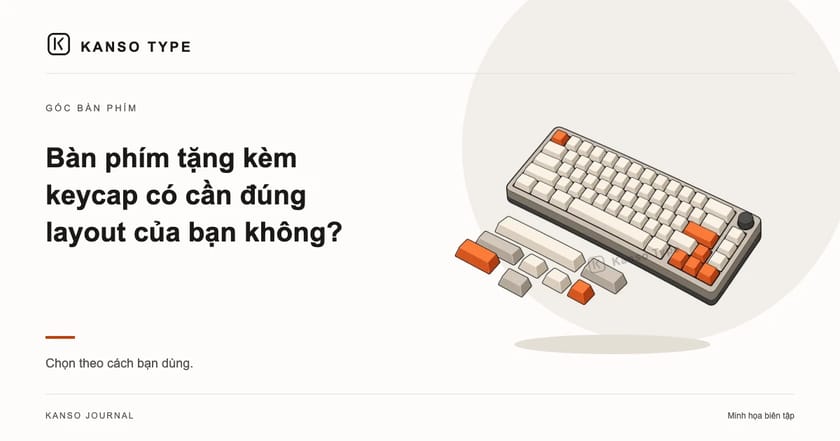
- Layout coverage. The set needs a keycap for every key on your board. Full-size boards also need number pad keys.
- Switch orientation. On some boards with north-facing LEDs, Cherry-profile keycaps can touch the switch housing on a few keys. If you are unsure, check the keyboard's product page.
Not sure which one to pick?
Tell us which keyboard you use now, how you like to type and roughly how much you want to spend. Kanso will suggest a few options to make the choice easier.